BreathFinder.io

Breathwork for Sleep

Slow the breath, and sleep follows
Fact Checked Claims in this article have been verified against trusted sources for accuracy and credibility.
Introduction

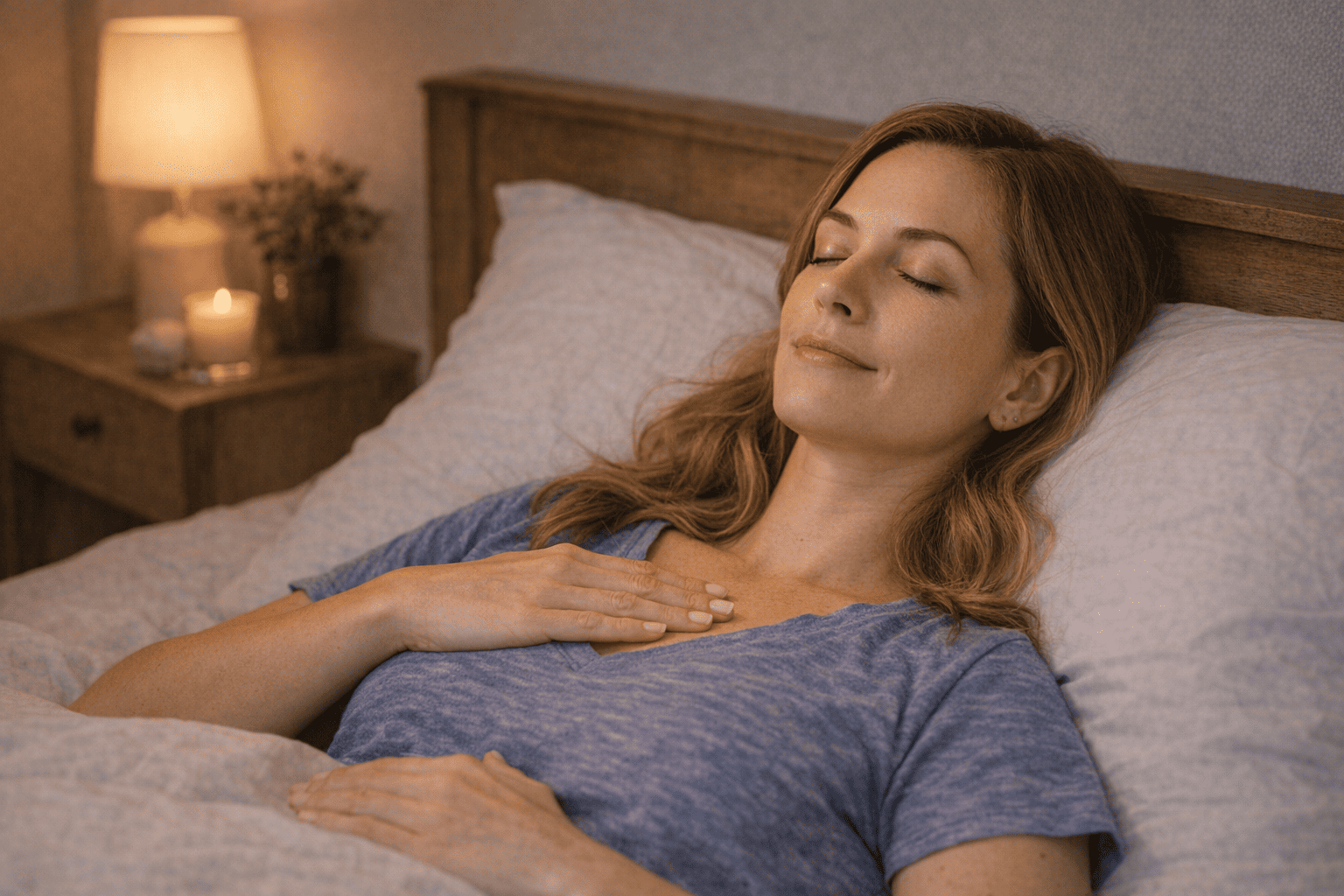
Breathwork for sleep is the practice of using slow, controlled breathing before bed to calm the nervous system and ease the body into rest. By lengthening the exhale and slowing the breath, techniques such as 4-7-8 and Coherent / Resonance Breathing shift the body out of its alert “fight-or-flight” state and into the calm state where sleep begins.

Most sleep problems start in the nervous system, not the bedroom. A mind still running on the day’s stress keeps the body in a state of arousal that is incompatible with falling asleep. Breathwork works directly on that arousal — it is one of the few tools you can use, lying in the dark, to signal safety to your own physiology. It won’t override a genuine sleep disorder, but for the racing-mind, tense-body kind of sleeplessness most of us know, it gives you a deliberate way down.

What You'll Learn
Whether breathwork actually improves sleep — and where it falls short
How slow breathing changes the nervous system to prepare you for rest
Five breathing techniques for sleep, scored and compared
What the research says, honestly
How and when to practise — and when to see a doctor instead

Table of Contents

Breathwork for Sleep
Breathwork for sleep is the use of structured, slow-paced breathing techniques — practised before bed or during night-time waking — to lower physiological arousal, activate the parasympathetic ("rest-and-digest") nervous system, and make falling and staying asleep easier. It is a behavioural, drug-free sleep aid, not a treatment for diagnosed sleep disorders.
Key Takeaways
Breathwork helps sleep by calming the nervous system — slowing the breath, especially lengthening the exhale, shifts the body from a stress state into the parasympathetic state where sleep begins.
The exhale is the active ingredient. A longer out-breath than in-breath (as in 4-7-8) triggers the slowing of heart rate that precedes sleep.
Best for the racing-mind, tense-body kind of sleeplessness — less effective for sleep disrupted by a physical disorder such as sleep apnea, which needs medical assessment.
The evidence is promising but early. Slow breathing reliably calms the nervous system; its direct effect on measured sleep quality is supported by small studies and is best described as a helpful aid, not a cure.
It's a skill, not a switch. Effects are strongest with regular practice, so the calm response becomes easier to reach on a bad night.

✦ ✦ ✦

Does breathwork help you sleep?

Yes — for the most common type of sleeplessness. Breathwork helps you fall asleep by lowering the physiological arousal that keeps you awake: a fast heart rate, shallow breathing, and a busy mind. Slowing the breath calms the nervous system and lets sleep arrive naturally. It is most effective for stress- and anxiety-driven sleeplessness, and least effective for sleep disrupted by a physical disorder.

The honest picture: breathwork is a genuine, useful tool, but it is not magic. It works best on the kind of night where your body is tired but your system won’t switch off — and that describes a large share of poor nights. It works least well when something physical is interrupting sleep, which is why persistent insomnia is worth taking to a doctor (see Evidence & Safety).

How does breathwork help you sleep?

Breathwork helps you sleep by activating the parasympathetic nervous system — the “rest-and-digest” branch that lowers heart rate, relaxes muscles, and reduces alertness. Slow breathing, particularly a long exhale, stimulates the vagus nerve, which slows the heart and tells the brain the body is safe. This is the same physiological shift that happens naturally as you drift off.

Three things are doing the work:

  1. The long exhale. On the out-breath, the heart rate naturally slows. Deliberately making the exhale longer than the inhale amplifies this and nudges the nervous system toward calm.
  2. Slowing the rate. Breathing at around six breaths per minute brings heart rate, blood pressure, and breathing into a coherent rhythm linked to higher heart-rate variability.
  3. Occupying the mind. Counting a breath pattern gives a busy mind a single, neutral task, interrupting the loop of worry that delays sleep.

To go deeper on the mechanism, see our overview of the benefits of breathwork and the related work on breathwork for anxiety, since night-time wakefulness and daytime anxiety share the same physiology.

✦ ✦ ✦

Can breathwork help with insomnia?

Breathwork can help mild and stress-related insomnia, and is widely used as part of sleep-hygiene and relaxation routines. It is not a standalone treatment for chronic or clinical insomnia, which is a recognised disorder best assessed by a doctor. Breathwork can sit alongside proven approaches such as cognitive behavioural therapy for insomnia (CBT-I), but should not replace medical care.

If you regularly take more than 30 minutes to fall asleep, wake repeatedly, or feel unrefreshed for weeks at a time, treat that as a signal to seek assessment. Loud snoring or waking up gasping can point to sleep apnea, which breathwork does not address.

Verified Professionals
Find Verified Breathwork Professionals Experienced in Sleep Support
Connect with experienced breathwork professionals who offer support for sleep, stress and nervous system regulation.
Browse Breathwork Professionals

When and how long should you practise?

Practise for five to ten minutes in bed, lights out, once you’re settled for sleep — and ideally a few minutes earlier in the evening too, so the technique is familiar when you need it. Most people feel a calming effect within minutes, but the reliable, drop-off-faster benefit builds over weeks of regular practice, not from a single night.

A simple structure: do a short, gentle session as part of winding down, then a longer one once you’re lying down. If you wake in the night, return to the same slow pattern rather than checking the time or reaching for your phone — the goal is to re-trigger the calm response, not to “try hard” to sleep.

✦ ✦ ✦

Proven Breathwork Techniques for sleep

The best breathing techniques for sleep all share one feature — a slow rate with an extended exhale. Below are five, ordered from most beginner-friendly to most demanding, each scored across BreathFinder’s five standard benefit dimensions. For sleep specifically, watch the Sleep Quality and Nervous System Regulation scores.

Technique Best for Duration Difficulty
Coherent / Resonance breathing Steady wind-down, nervous-system reset 10 min Easy
Pursed-lip breathing Slowing the exhale without counting 5 min Easy
4-7-8 breathing Falling asleep, the classic sleep breath 4–8 cycles Moderate
Bhramari (humming bee breath) A racing mind, calming through sound 5–6 rounds Moderate
Buteyko-style nasal breathing Mouth-breathing, snoring, restless sleep 5–10 min Moderate

Benefit scores reflect BreathFinder’s editorial assessment across five dimensions, on a 0–100 scale.

1
Coherent / Resonance Breathing
Sit or lie down comfortably. Breathe in gently through your nose for about 5–6 seconds, then breathe out through your nose for about 5–6 seconds. Aim for roughly six breaths per minute — smooth and even, with no holds — and continue for around 10 minutes.
Benefits: Brings heart rate and breathing into a steady rhythm linked to higher heart-rate variability — the calm, balanced state that precedes sleep.
Watch how to do this →
Coherent / Resonance breathing diagramCoherent, or resonance, breathing: a smooth even rhythm of about a five-second inhale and a five-second exhale, roughly five to six breaths per minute, with no holds.Coherent / Resonance BreathingINHALE 5sEXHALE 5sA smooth, even wave — about 5–6 breaths per minuteBreathFinder.io
Benefit Scores
Stress Reduction85
Nervous System Regulation95
Sleep Quality80
Focus & Clarity75
Beginner Accessibility80

Coherent breathing scores highest on nervous system regulation (95/100), which is what makes it such a reliable wind-down — breathing at around six per minute settles the body into the calm, balanced state that precedes sleep.
Learn more about coherent breathing →

2
Pursed-Lip Breathing
Inhale gently through your nose for about 2 seconds. Purse your lips as if you're about to whistle or blow through a straw, then exhale slowly and steadily through pursed lips for about 4 seconds. Repeat for around 5 minutes — the pursed lips do the pacing for you, so there's nothing to count.
Benefits: Naturally slows and lengthens the exhale, which eases the body toward the calm, parasympathetic state that precedes sleep — with no counting required.
Watch how to do this →
Pursed-lip breathing diagramPursed-lip breathing: a short gentle inhale through the nose for about two seconds, then a long slow steady exhale through pursed lips for about four seconds.Pursed-Lip BreathingINHALE · NOSE 2sEXHALE · LIPS 4sExhale slowly through pursed lips — like blowing through a strawBreathFinder.io
Benefit Scores
Stress Reduction80
Nervous System Regulation82
Sleep Quality82
Focus & Clarity68
Beginner Accessibility92

Pursed-lip breathing is our most accessible technique — top of the five on beginner accessibility (92/100). The pursed lips slow the exhale for you, so there's nothing to count, which makes it an easy first step into slower breathing.
Learn more about pursed-lip breathing →

3
4-7-8 Breathing
Start by exhaling completely through the mouth. Inhale quietly through your nose for a count of 4, hold the breath for a count of 7, then exhale through the mouth for a count of 8. Repeat for 4 cycles to start, building to 8 as it becomes comfortable — keep the counts gentle rather than straining for the full ratio.
Benefits: The long, controlled exhale and brief hold slow the heart rate and quiet the mind — the classic pattern for easing the body from wakefulness into sleep.
Watch how to do this →
4-7-8 breathing diagram4-7-8 breathing: inhale through the nose for four seconds, hold the breath for seven seconds, then exhale through the mouth for eight seconds.4-7-8 BreathingINHALE4sHOLD7sEXHALE8sBar length shows how long each phase lastsBreathFinder.io
Benefit Scores
Stress Reduction90
Nervous System Regulation85
Sleep Quality95
Focus & Clarity60
Beginner Accessibility75

4-7-8 breathing scores highest on sleep quality (95/100), making it our top-scoring technique for winding down and falling asleep.
Learn more about 4-7-8 breathing →

4
Bhramari (Humming Bee Breath)
Sit or lie comfortably and take a gentle breath in through the nose. As you exhale, make a low, steady humming sound — like a bee — with the mouth closed, feeling the soft vibration through the head and chest. Keep it quiet and easy, and repeat for 5–6 rounds, letting the exhale lengthen naturally.
Benefits: The gentle humming lengthens the exhale and gives a busy mind a single point of focus — a soothing way to quiet mental chatter as you settle toward sleep.
Bhramari humming bee breath diagramBhramari, or humming bee breath: a gentle inhale through the nose, then a long exhale with a low steady humming sound and the mouth closed, creating a soft vibration.Bhramari — Humming Bee BreathINHALE · NOSEEXHALE · HUMMMMHum softly on the out-breath — mouth closed, gentle vibrationBreathFinder.io
Benefit Scores
Stress Reduction84
Nervous System Regulation85
Sleep Quality85
Focus & Clarity80
Beginner Accessibility82

Bhramari (Humming Bee Breath) is a balanced all-rounder, scoring 85/100 on both nervous-system regulation and sleep quality. The humming vibration gives a busy mind a single point to rest on, which makes it a good choice when it's mental chatter — rather than a tense body — keeping you awake.
Explore more pranayama exercises →

5
Buteyko-style Nasal Breathing
Close the mouth and breathe only through the nose. Let the breath become light, slow, and quiet — slightly less than you feel you need. Keep it gentle and relaxed; there should be no strain and no air hunger. Continue for 5–10 minutes, or as you settle for sleep.
Benefits: Nasal breathing supports better airflow and less disrupted sleep — helpful if mouth-breathing or snoring leaves you waking unrefreshed. Keep it light and easy, never strained.
Watch how to do this →
Buteyko-style nasal breathing diagramButeyko-style nasal breathing: light, slow, quiet breathing in and out through the nose only, with the mouth closed and no air hunger.Buteyko-style Nasal BreathingINHALE · NOSEEXHALE · NOSELight, slow, quiet — mouth closed, no air hungerBreathFinder.io
Benefit Scores
Stress Reduction78
Nervous System Regulation84
Sleep Quality86
Focus & Clarity75
Beginner Accessibility72

Buteyko-style Nasal Breathing is the one to try if mouth-breathing or snoring is part of your problem — it scores 86/100 on sleep quality, second only to 4-7-8. Keep it light and easy: if you feel air hunger, you're pushing too hard, so ease off. For the fuller practice, see the Buteyko Method.

Which Breathing Technique Should I Use?

The right technique depends on what's keeping you awake. Use this quick guide to choose:
Struggling to drop off? Use 4-7-8 Breathing — the classic get-to-sleep breath.
Want a steady wind-down routine? Practise Coherent / Resonance Breathing for a calm, even rhythm.
New to breathwork? Start with Pursed-Lip Breathing — it paces the exhale for you, with nothing to count.
Mind racing with chatter? Try Bhramari (Humming Bee Breath) — the gentle hum gives a busy mind one thing to rest on.
Mouth-breathing or snoring? Use Buteyko-style Nasal Breathing — light, slow, nose-only.

✦ ✦ ✦

Is Breathwork for Sleep Backed by Science?

Partly. The evidence that slow breathing calms the nervous system is strong; the evidence that it directly and substantially improves measured sleep is promising but still early, and we present it as such.

  • The mechanism is well supported. A 2018 review in Frontiers in Human Neuroscience found that slow breathing consistently increases heart-rate variability and parasympathetic activity — the physiological shift that precedes sleep. Zaccaro et al., 2018
  • Direct sleep effects are modest in trials so far. A 2020 randomised controlled trial in Scientific Reports, using polysomnography, found that pre-sleep slow breathing increased heart-rate variability but did not produce robust improvements in overall sleep quality in this small sample (20 participants). Kuula et al., 2020
  • Some techniques rest on tradition more than trials. Humming (Bhramari) and light nasal breathing are long-established calming practices with plausible mechanisms — slower, gentler breathing and better nasal airflow — but their specific evidence for sleep is limited to small or preliminary studies. We include them as promising, low-risk options, not as clinically proven treatments.

Bottom line: breathwork reliably moves the nervous system toward the state in which sleep happens. As a direct sleep treatment the trial evidence is limited and the studies are small — so it’s best understood as a low-risk, genuinely useful aid that complements good sleep habits, not as a replacement for medical care where a sleep disorder may be present.

Is breathwork for sleep safe?

Yes, for most people. Slow, gentle breathing before bed is safe and low-risk. A few sensible cautions apply, and persistent sleep problems are worth taking to a doctor.
A note on safety
Slow, gentle breathing before bed is safe for most people. Avoid fast or forceful breathing and long breath-holds at bedtime — they can cause light-headedness or tingling and are activating rather than calming. If you are pregnant, or have cardiovascular, respiratory, epilepsy, or serious mental-health conditions, check with a doctor before starting breath-hold techniques. And if poor sleep persists for weeks, or you snore loudly or wake gasping, see a doctor — these can signal a sleep disorder such as apnea that breathwork will not fix. Breathwork is a supportive tool, best practised alongside, not instead of, medical advice. To work with someone in person, find a breathwork practitioner.

✦ ✦ ✦

FAQs & Common Misconceptions

Most people feel a calming effect within minutes of slowing the breath, and that alone can help on the night. What builds over two to three weeks of regular practice is reliability — the calm response becomes familiar and quicker to reach on a difficult night. So you get something immediately, and more with consistency.

No. Breathwork is a complementary tool, not a replacement for prescribed medication or medical treatment. Never stop or change sleep medication without talking to your doctor. Breathwork can sit alongside medical care and evidence-based approaches such as CBT-I, but it does not treat a diagnosed sleep disorder on its own.

Yes — breathwork is generally safe to practise alongside therapy, CBT-I, or prescribed sleep medication, and is used as a complementary wind-down tool. It doesn’t replace medical treatment, and you should never stop or change medication without your doctor, but adding gentle slow breathing to an existing plan is low-risk and often helpful.

There’s no single best technique — the right one depends on what’s keeping you awake. A racing mind responds well to the humming of Bhramari; snoring or mouth-breathing to light nasal breathing; general wind-down to 4-7-8 or coherent breathing. Try a few and keep the one that settles you fastest.

Breathwork produces a measurable physiological change, not just a feeling. Slowing the breath stimulates the vagus nerve, lowers heart rate, and shifts the nervous system into its rest state — the same shift that happens as you fall asleep. A 2018 review in Frontiers in Human Neuroscience found slow breathing reliably raises heart-rate variability and parasympathetic activity (Zaccaro et al., 2018). The effect is real, though it works best on stress-driven sleeplessness.

The goal is to lower arousal, not to force sleep. Trying hard to sleep raises arousal and backfires. Use the breathing to feel calmer and let sleep arrive on its own. If you’re still wide awake after about 20 minutes, getting up briefly is often more effective than straining in bed.

For sleep, the opposite is true. Fast or forceful breathing is activating and can cause light-headedness. Calming techniques use a slow rate and a long, gentle exhale. Save energising or intense breathwork for the daytime — before bed, slower and softer is what signals the body to rest.

✦ ✦ ✦

Want to Learn More - Sign Up Below

Blog Posts Subscription form

Conclusion

Poor sleep usually isn’t a willpower problem — it’s a nervous-system problem. When your body is still braced for the day, sleep can’t get a foothold. Breathwork gives you a direct, quiet way to change that: slow the breath, lengthen the exhale, and let the physiology that precedes sleep do its work.

It won’t solve every sleepless night, and it isn’t a substitute for medical care when something more is going on. But as a free, portable, side-effect-free thing to reach for in the dark, it’s one of the more reliable tools there is. Pick one technique from above, practise it for a week, and keep the one that settles you fastest.

Justin McCoy, Founder & Editor of BreathFinder and Certified Breath Coach BreathFinder Editorial Team
Written by
Founder & Editor · Certified Breath Coach
Justin McCoy is a Certified Breath Coach and the founder of BreathFinder. This article is produced and reviewed by the BreathFinder Editorial Team, covering breathwork techniques, the science of breathing, and safe practice.

The views expressed in this article are those of the author and are for informational purposes only. This information is not to be taken as medical advice. Please consult your physician and read the warnings before joining or participating in any breathwork information published on our website.

BreathFinder.io
Thanks for saying hello.
How can we help?
BreathFinder.io
Thanks for saying hello.
How can we help?
Share to...